• ABOUT
    arrow_drop_down
    • About WASD
    • Portfolio
    • 20th Anniversary
    • Teams
    • Contact Us
    • Gallery
  • PUBLISHING
    arrow_drop_down
    • Overview
      arrow_drop_down
      • Publishing Ethics
      • Indexing & Ranking
      • Editorial Boards
    • Journals
      arrow_drop_down
      • All Journals
      • WJEMSD
      • WJSTSD
      • IJIKMMENA
      • IJFNPH
      • IJSR
      • WJWSD
      • WJYSD
      • IJGA
    • Books
      arrow_drop_down
      • All Books
      • Outlook
      • GTSD
      • Diaspora
      • MENA
      • Africa
      • Sudan
      • Proceedings
  • CONFERENCES
    arrow_drop_down
    • Overview
      arrow_drop_down
      • Past Speakers
      • Host Requirements
      • Sponsorship Opportunities
        arrow_drop_down
        • Past Sponsors
    • Search All
      arrow_drop_down
      • Forthcoming
      • Past
    • Search by Subject
      arrow_drop_down
      • Annual
      • United Nations
      • Sustainability
      • Women
      • Diaspora
      • MENA
      • Africa
        arrow_drop_down
        • Sudan
      • Policy
        arrow_drop_down
        • Climate Change
        • Health
          arrow_drop_down
          • Covid 19
          • Public Health
        • Education
          arrow_drop_down
          • Graduates
          • E-Learning
        • Youth
      • Leadership
      • Business
        arrow_drop_down
        • Entrepreneurship
        • Investment
  • ACADEMY
    arrow_drop_down
    • Overview
    • Training
      arrow_drop_down
      • Overview
      • Search All
        arrow_drop_down
        • Forthcoming
        • Past
        • Search by Levels
          arrow_drop_down
          • Diploma
          • Programmes
          • Courses
        • Search By Subject
          arrow_drop_down
          • SUSTAINABILITY MASTERCLASS
            arrow_drop_down
            • Economy
            • Sustainability
          • PUBLIC POLICY
            arrow_drop_down
            • Public Policy
            • Education
            • Higher Education
            • Health
              arrow_drop_down
              • Covid-19
            • Women
            • Youth
            • Security
          • DIGITAL TRANSFORMATION
            arrow_drop_down
            • Artificial Intelligence
            • Data Science
            • Digital Transformation
            • Innovation
            • Knowledge Management
            • Technology Transfer
          • BUSINESS & MANAGEMENT
            arrow_drop_down
            • Entrepreneurship
            • HRM
            • Leadership
            • Management
            • Performance Improvement
            • Investment
      • Workshops
    • Teaching
      arrow_drop_down
      • Framework
      • Universities
        arrow_drop_down
        • SDGs Universities
          arrow_drop_down
          • Interactive Map
        • African Universities
          arrow_drop_down
          • Interactive Map
          • Sudan Universities
        • Arab Universities
          arrow_drop_down
          • Interactive Map
          • Gulf Universities
            arrow_drop_down
            • Qatar Universities
            • Bahrain Universities
            • Kuwait Universities
            • Emirates Universities
            • Oman Universities
            • KSA Universities
        • Sudan Universities
          arrow_drop_down
          • Interactive Map
        • Islamic Universities
        • Women Universities
    • Research
      arrow_drop_down
      • Research Tracks
    • Consultancy
      arrow_drop_down
      • Smart KM
  • COMMUNITY
    arrow_drop_down
    • Overview
    • Search All
      arrow_drop_down
      • Children
      • Diaspora
      • Debates
      • Health
      • Ideas
      • Infocus
      • Interviews
      • MENA
      • Women
      • Sudan
      • Youth
  • EXPERTS
    arrow_drop_down
    • Overview
    • Global Who’sWho
      arrow_drop_down
      • Interactive Map
    • Women Who’sWho
    • Diaspora Who’sWho
    • Arab Who’sWho
      arrow_drop_down
      • Interactive Map
    • Africa Who’sWho
      arrow_drop_down
      • Interactive Map
    • Sudan Who’sWho
      arrow_drop_down
      • Interactive Map
      • Sudan Doctors
        arrow_drop_down
        • Interactive Map
  • PARTNERSHIPS
    arrow_drop_down
    • Overview
    • Partners
      arrow_drop_down
      • United Nations
      • Universities
      • Associations
      • Public Sector
      • Private Sector
  • NEWS
  • RESOURCES
    arrow_drop_down
    • Digital Library
    • Book Store
    • World Organisations
      arrow_drop_down
      • Search All
        arrow_drop_down
        • Europe
          arrow_drop_down
          • United Kingdom
        • North America
          arrow_drop_down
          • USA
          • Canada
        • Oceania
          arrow_drop_down
          • Australia
          • New Zealand
        • Asia
          arrow_drop_down
          • China
        • Africa
          arrow_drop_down
          • Sudan
        • MENA
          arrow_drop_down
          • GCC
            arrow_drop_down
            • UAE
            • Bahrain
            • Oman
            • KSA
            • Qatar
            • Kuwait
        • Latin America
        • Caribbean
      • IATA
      • United Nations
      • International
      • Foundations
      • Private Sector
        arrow_drop_down
        • Airlines
      • Financial Institutions
        arrow_drop_down
        • Chambers of Commerce
      • Think Tanks
      • Libraries
      • NGOs
      • Students
      • Research
  • TIMELINE
Sign in

Strategic Leadership in HE

  • Send an email
  • Other Courses
  • Overview
  • Registration
  • Learning Outcome
  • Program
  • Resources
  • Target Participants
  • Facilitators
  • Gallery
  • prev
  • next
  • Get directions
  • Other Courses
  • Share
  • prev
  • next
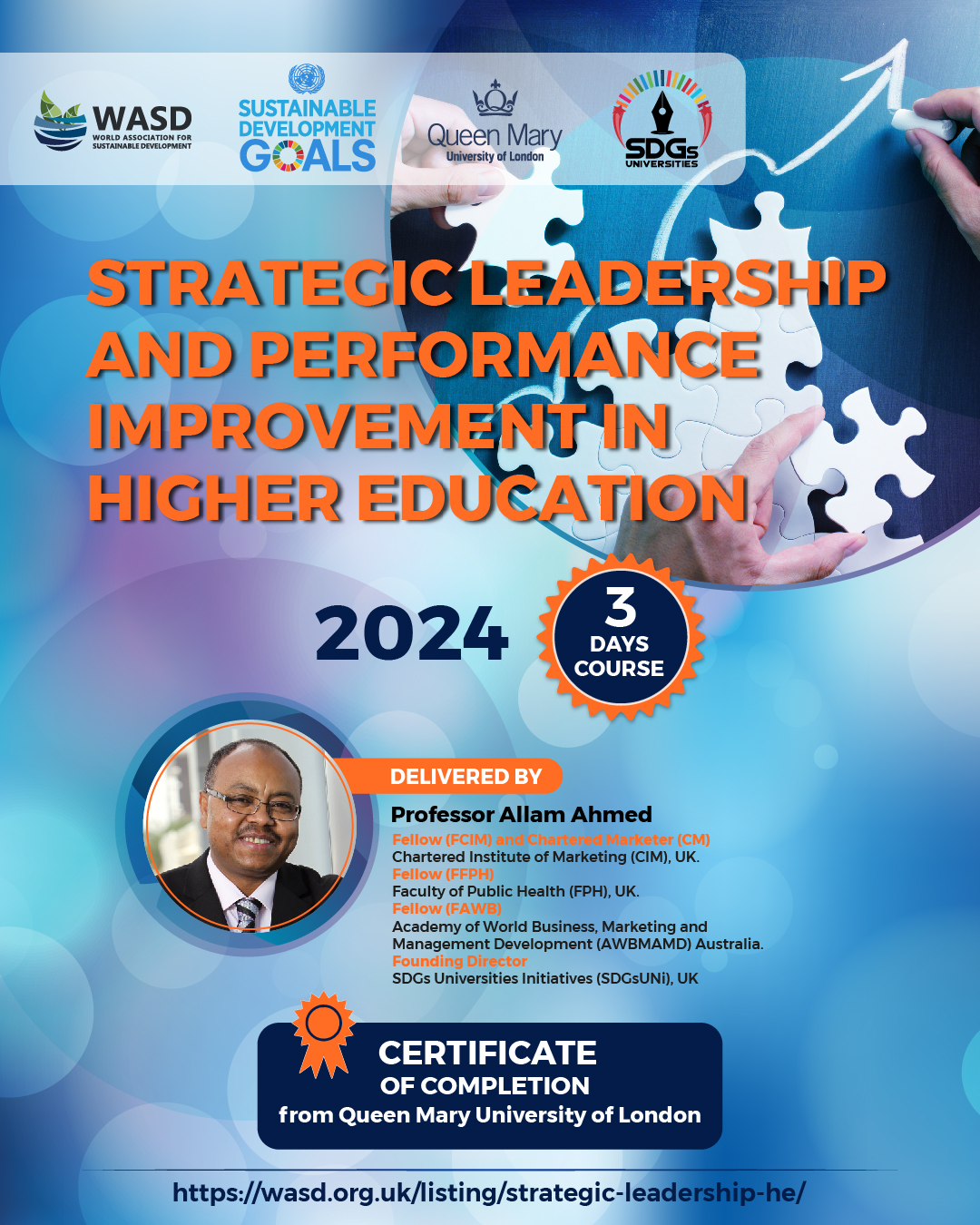
Overview

Three Days Course        2024     
Certificate of attendance from Queen Mary University of London

This course has been designed to introduce a variety of perspectives on strategic leadership and performance improvement in the higher education (HE) institutions (universities, colleges and research institutes) particularly in the Post Covid-19 global pandemic.

In today's world, HE institutions must confront new realities rapidly manifesting themselves in a diversely complex and fast-changing world. Business as usual will not suffice. HE institutions need to be expansively re-focused in order to become more sensitive and responsive to its mission of developing graduates who, in addition to conventional graduate training, are also able to fight the intellectual battle for self-confidence and self-assertion as equal players in the global and intensely competitive knowledge economy. There will be great focus in the course on issues to do with teaching excellence including teaching quality, learning environment, staff continuous professional development and other important issues relating to student support and career development.

The course aims to enable leaders and decision makers to introduce fit-for-purpose leadership styles and approaches to their HE institutions. The course will also help HE leaders to transform their teaching and research towards achieving the United Nations Agenda 2030 and its 17 Sustainable Development Goals. In doing so, participants will learn how to ensure all academic programmes are embedded and aligned (designed/revalidated) with the 17 SDGs. The aim is to ensure future graduates are fully aware of the subject of sustainability and accordingly, able to engage on a global scale to address the world future global challenges and find ways for sustainable solutions.

At the end of the course participants should be able to acquire a comprehensive knowledge and practical experience about leadership styles and approaches in alignment with the local needs and capabilities.
Related Sustainable Development Goals
  • SDG4
  • SDG8
  • SDG9
  • SDG12
  • SDG17
  • SDG10
  • SDG13
  • SDG16
Related Courses
  • Sustainability Masterclass
  • Leadership
  • Public Policy
  • Management
  • Entrepreneurship
  • Economy
  • HRM
  • Higher Education
Location

London, Greater London, England, United Kingdom
Get Directions
Country/Regions
  • Europe
  • UK
Social Networks
  • Facebook
  • Twitter
  • YouTube
  • LinkedIn
  • Website

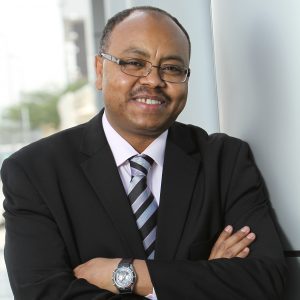
The workshop is designed and will be delivered by one of the world's top and renowned expert on knowledge management, sustainable development, public policy and leadership: Professor Allam Ahmed (United Kingdom)

Professor of Knowledge Management and Sustainable Development; Founding President World Association for Sustainable Development; Founding Director SDGs Universities Initiatives; and Honorary Professor Faculty of Medicine and Dentistry and Senior Policy Fellow Global Policy Institute, Queen Mary University of London. He is a Fellow (FCIM) and Chartered Marketer of the Chartered Institute of Marketing (CIM), UK; Fellow (FFPH) Faculty of Public Health, UK; PhD in Economics in two years at Edinburgh Napier University, UK; awarded the Royal Agricultural University (RAU) Scholarship and Prestigious Book Prize for Best MSc/MBA Dissertation; Listed in the Who’s Who in the World 2009-2021 and 2021 Who’s Who in the World Lifetime Achievement Award, Who’s Who in Finance and Business 2009/2010 and Who’s Who in America 2012-2014 published by Marquis Who’s Who, USA.

Contact Us
To register/enquire about this course and all our various comprehensive list of courses and workshops, please contact us (admin@wasd.org.uk) and if you have any question and/or if you would like to request a training workshop/program not listed in our portfolio please contact our training coordinator Janet Snow at: janet.snow@wasd.org.uk.
Registration and Fees

The course will be delivered either face-to-face or online via video conferencing facilities using Zoom Application.

Included in the conference fee, the following learning materials will be provided:

  • Admission to all sessions (including all coffee/tea breaks and lunches in face-to-face).
  • All overhead slides.
  • Case studies (print and video).
  • Certificate of attendance from WASD and Queen Mary University of London.
What will you learn

Today, more than ever before in human history, the wealth or poverty of nations depends on the quality of HE. Revolutionary breakthroughs in the knowledge economy are leading to remarkable changes in the way forward-looking nations capacitate their graduates. In this era of global skills and knowledge race, all universities cannot fail to realise, accept and accomplish its natural and ascribed roles as a strategic agent for national development.

Whilst there has been a tremendous growth in size, the expansion of HE in almost all parts of the world, this expansion has caused average quality of education in many countries to decline as resources are stretched increasingly thin. Essentially, the expansion has been less differentiated and, therefore, ill-planned to confront emergent development needs. Rather, what is evident is a stupendous replication of traditional disciplinary-based techniques of knowledge production. These have, nevertheless, increased the richness of knowledge about the universe we live in but without apparently translating or transforming the catchment societal environments in terms of measurable productive capacities. There are also grave concerns that HE in many developing countries is becoming increasingly obsolete which, in part, is why development programmes are stultified even from the outset. There are also serious issues regarding the under-performance in research – state of academic research is less-than-satisfactory in almost all universities in the developing countries. Therefore, developing countries HE institutions must confront the ‘new realities’ evident in the environments in which they operate. Many scholars and policy makers have called for a transformative innovation agenda which embraces radical change for new synthesis and approaches for transforming HE in the developing countries.

Youth across the world particularly in Africa and the Arab regions are growing fast and governments in the region expect their HE institutions to make a leading contribution by producing graduates ready to grasp the various opportunities generated in the digital economy. It is therefore important that all HE institutions and societies to consider the youth in all their curriculum design, programs development as well as fulfilling their role as major agents in the realisation of the various future strategic visions in most countries in the region. According to recent reports by the World Bank, with a large youth representation and youth unemployment ratio, the Arab region as an example faces a potential crisis and the education sector should be reformed to include specific qualifications and specialisations in the digital economy. The private sector can play a larger role in helping governments and academia focus investments on high-priority and high demand skills, thus young students are ready for employment the moment they graduate.

The key objectives of the course are:

  • This integrative course aims to develop a deeper understanding of the theoretical and practical aspects to leadership within HE, and to develop the essential skills and competencies necessary to plan, monitor and control different tasks and events.
  • Develop an understanding of the different approaches to leadership and management to ensure HE is at peace with itself.
  • How HE institutions can reposition and rebrand themselves as an excellent provider of transformative education, achieve national and international recognition.
  • How universities can handle effectively the changing expectations of students; increased competition in the sector; reduction in income; changing technology and other issues.
  • This course will also complement the different management skills already developed through earlier other (if any) management training and courses.
  • How to ensure HE is confident about its future.
  • In addition, participants will have insight into: critical analysis; interactive and team working; creativity; and problem solving.
Program Structure
  1. The course will provide participants within the public and private sectors with the best scientific and management solutions to implement effectively in their organisations.
  2. There will be an activity or set of activities for each session. These will be designed to help you engage with the introduction to the theories explored within the course.
  3. Your Facilitator will be on hand to guide you through the programme and will expect you to bring personal experience and reflection on the topics covered.
  4. Group work will be required for participants to engage in the course. Such activity allows participants to embed the new knowledge within their experience through active discussion and challenge.

Programme 

  • General introduction to leadership
  • Strategic leadership and planning
  • Difference between leadership and management
  • Understanding the problem in HE
  • Leadership skills and tactics in HE
  • Effective leadership in HE
  • Essentials of teaching excellence
  • Aspects of the transforming learning and teaching
  • Role of HE in knowledge-based economy
  • Role of HE in achieving the UN Agenda 2030 and its 17 SDGs
  • Discussion and reflection – next steps
Target Participants
  • The course covers materials for all levels from junior academics through to senior level.
  • HE officials: minsters, undersecretaries, vice chancellors, deans, head of department, etc.
  • Academics and researchers.
  • Students, youth, NGOs (voluntary) and civil society groups (public).
  • Professionals, businesses and other stakeholders particularly the private sector managers responsible for leading change and transformation efforts.
  • Managers and directors responsible for transformation, projects, programmes, knowledge, innovation or change management.
  • Experienced managers who have significant futures-oriented management responsibilities, and who are interested in reflecting on their own experience and discovering new ideas.
Benefits for Employers

The course participants will have the opportunity to showcase their role in different fields with their employers. After completion of the course, participants (supported by their tutor with additional fee) will be given the opportunity to write a report describing what they have learnt and what is particularly relevant to their employers. The report will focus on one single perspective or to build a hybrid model that will help their employers to achieve their strategic and tactical goals. This will help reassure the employers of the benefits of the programme and help consolidate managers’ understanding.

You May Also Be Interested In

Digital Transformation and Sustainable Development for Future Women Leaders

18 July 2023 This two-day course will be facilitated by world renowned experts in Digital Transformation…
  • Phone Number
  • SDG4
  • +2

Artificial Intelligence and Data Science

This course has been designed to introduce a variety of fundamental perspectives on Artificial Intelligence…
  • Phone Number
  • SDG8
  • +5

Artificial Intelligence and Knowledge Management for Future Digital Leaders

4 September 2023 and Multiple 2023 dates Artificial Intelligence and Knowledge Management for Future…
  • Phone Number
  • SDG4
  • +2

WASD is a global forum that brings together experts from across the world to discuss issues relating to sustainable development, science and technology management.

Facebook-f Youtube Twitter Linkedin Flickr

Quick Links

  • About WASD
  • Gallery
  • Teams
  • Contact Us
  • Book Store
  • Timeline

EXPERTS

  • Global Who’sWho
  • Women Who’sWho
  • Diaspora Who’sWho
  • Arab Who’sWho
  • Africa Who’sWho
  • Sudan Who’sWho

Get in touch

© Wasd

All rights reserved

Cart

  • Facebook
  • Twitter
  • WhatsApp
  • Telegram
  • LinkedIn
  • Tumblr
  • VKontakte
  • Mail
  • Copy link