• ABOUT
    arrow_drop_down
    • About WASD
    • Portfolio
    • 20th Anniversary
    • Teams
    • Contact Us
    • Gallery
  • PUBLISHING
    arrow_drop_down
    • Overview
      arrow_drop_down
      • Publishing Ethics
      • Indexing & Ranking
      • Editorial Boards
    • Journals
      arrow_drop_down
      • All Journals
      • WJEMSD
      • WJSTSD
      • IJIKMMENA
      • IJFNPH
      • IJSR
      • WJWSD
      • WJYSD
      • IJGA
    • Books
      arrow_drop_down
      • All Books
      • Outlook
      • GTSD
      • Diaspora
      • MENA
      • Africa
      • Sudan
      • Proceedings
  • CONFERENCES
    arrow_drop_down
    • Overview
      arrow_drop_down
      • Past Speakers
      • Host Requirements
      • Sponsorship Opportunities
        arrow_drop_down
        • Past Sponsors
    • Search All
      arrow_drop_down
      • Forthcoming
      • Past
    • Search by Subject
      arrow_drop_down
      • Annual
      • United Nations
      • Sustainability
      • Women
      • Diaspora
      • MENA
      • Africa
        arrow_drop_down
        • Sudan
      • Policy
        arrow_drop_down
        • Climate Change
        • Health
          arrow_drop_down
          • Covid 19
          • Public Health
        • Education
          arrow_drop_down
          • Graduates
          • E-Learning
        • Youth
      • Leadership
      • Business
        arrow_drop_down
        • Entrepreneurship
        • Investment
  • ACADEMY
    arrow_drop_down
    • Overview
    • Training
      arrow_drop_down
      • Overview
      • Search All
        arrow_drop_down
        • Forthcoming
        • Past
        • Search by Levels
          arrow_drop_down
          • Diploma
          • Programmes
          • Courses
        • Search By Subject
          arrow_drop_down
          • SUSTAINABILITY MASTERCLASS
            arrow_drop_down
            • Economy
            • Sustainability
          • PUBLIC POLICY
            arrow_drop_down
            • Public Policy
            • Education
            • Higher Education
            • Health
              arrow_drop_down
              • Covid-19
            • Women
            • Youth
            • Security
          • DIGITAL TRANSFORMATION
            arrow_drop_down
            • Artificial Intelligence
            • Data Science
            • Digital Transformation
            • Innovation
            • Knowledge Management
            • Technology Transfer
          • BUSINESS & MANAGEMENT
            arrow_drop_down
            • Entrepreneurship
            • HRM
            • Leadership
            • Management
            • Performance Improvement
            • Investment
      • Workshops
    • Teaching
      arrow_drop_down
      • Framework
      • Universities
        arrow_drop_down
        • SDGs Universities
          arrow_drop_down
          • Interactive Map
        • African Universities
          arrow_drop_down
          • Interactive Map
          • Sudan Universities
        • Arab Universities
          arrow_drop_down
          • Interactive Map
          • Gulf Universities
            arrow_drop_down
            • Qatar Universities
            • Bahrain Universities
            • Kuwait Universities
            • Emirates Universities
            • Oman Universities
            • KSA Universities
        • Sudan Universities
          arrow_drop_down
          • Interactive Map
        • Islamic Universities
        • Women Universities
    • Research
      arrow_drop_down
      • Research Tracks
    • Consultancy
      arrow_drop_down
      • Smart KM
  • COMMUNITY
    arrow_drop_down
    • Overview
    • Search All
      arrow_drop_down
      • Children
      • Diaspora
      • Debates
      • Health
      • Ideas
      • Infocus
      • Interviews
      • MENA
      • Women
      • Sudan
      • Youth
  • EXPERTS
    arrow_drop_down
    • Overview
    • Global Who’sWho
      arrow_drop_down
      • Interactive Map
    • Women Who’sWho
    • Diaspora Who’sWho
    • Arab Who’sWho
      arrow_drop_down
      • Interactive Map
    • Africa Who’sWho
      arrow_drop_down
      • Interactive Map
    • Sudan Who’sWho
      arrow_drop_down
      • Interactive Map
      • Sudan Doctors
        arrow_drop_down
        • Interactive Map
  • PARTNERSHIPS
    arrow_drop_down
    • Overview
    • Partners
      arrow_drop_down
      • United Nations
      • Universities
      • Associations
      • Public Sector
      • Private Sector
  • NEWS
  • RESOURCES
    arrow_drop_down
    • Digital Library
    • Book Store
    • World Organisations
      arrow_drop_down
      • Search All
        arrow_drop_down
        • Europe
          arrow_drop_down
          • United Kingdom
        • North America
          arrow_drop_down
          • USA
          • Canada
        • Oceania
          arrow_drop_down
          • Australia
          • New Zealand
        • Asia
          arrow_drop_down
          • China
        • Africa
          arrow_drop_down
          • Sudan
        • MENA
          arrow_drop_down
          • GCC
            arrow_drop_down
            • UAE
            • Bahrain
            • Oman
            • KSA
            • Qatar
            • Kuwait
        • Latin America
        • Caribbean
      • IATA
      • United Nations
      • International
      • Foundations
      • Private Sector
        arrow_drop_down
        • Airlines
      • Financial Institutions
        arrow_drop_down
        • Chambers of Commerce
      • Think Tanks
      • Libraries
      • NGOs
      • Students
      • Research
  • TIMELINE
Sign in

Essentials of Urogynaecology

  • Send an email
  • Other Courses
  • Overview
  • Registration
  • Learning Outcome
  • Program
  • Resources
  • Target Participants
  • Facilitators
  • Gallery
  • prev
  • next
  • Get directions
  • Other Courses
  • Share
  • prev
  • next
Overview

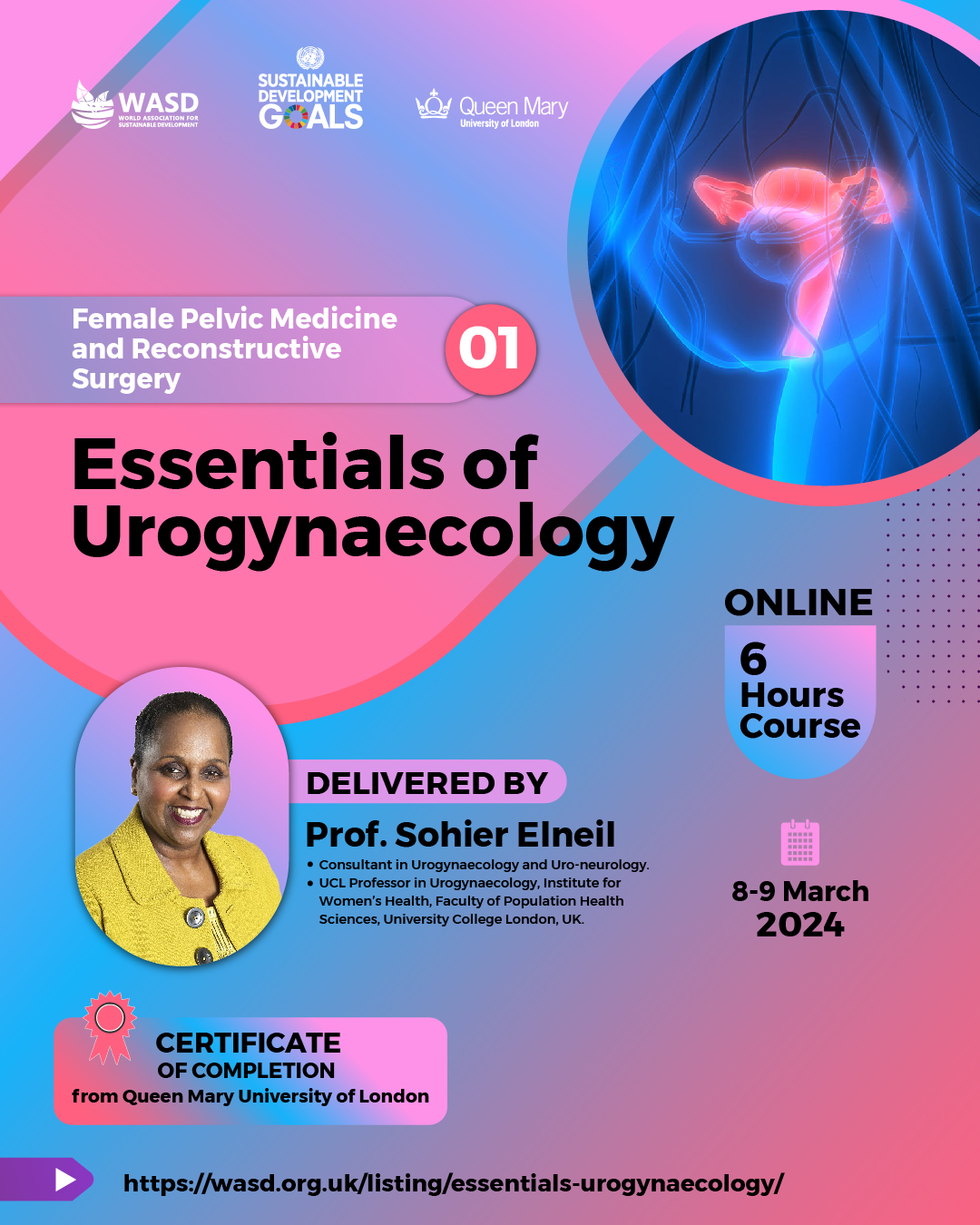
Essentials of Urogynaecology (Female Pelvic Medicine and Reconstructive Surgery)      REGISTER

6 Hours Course
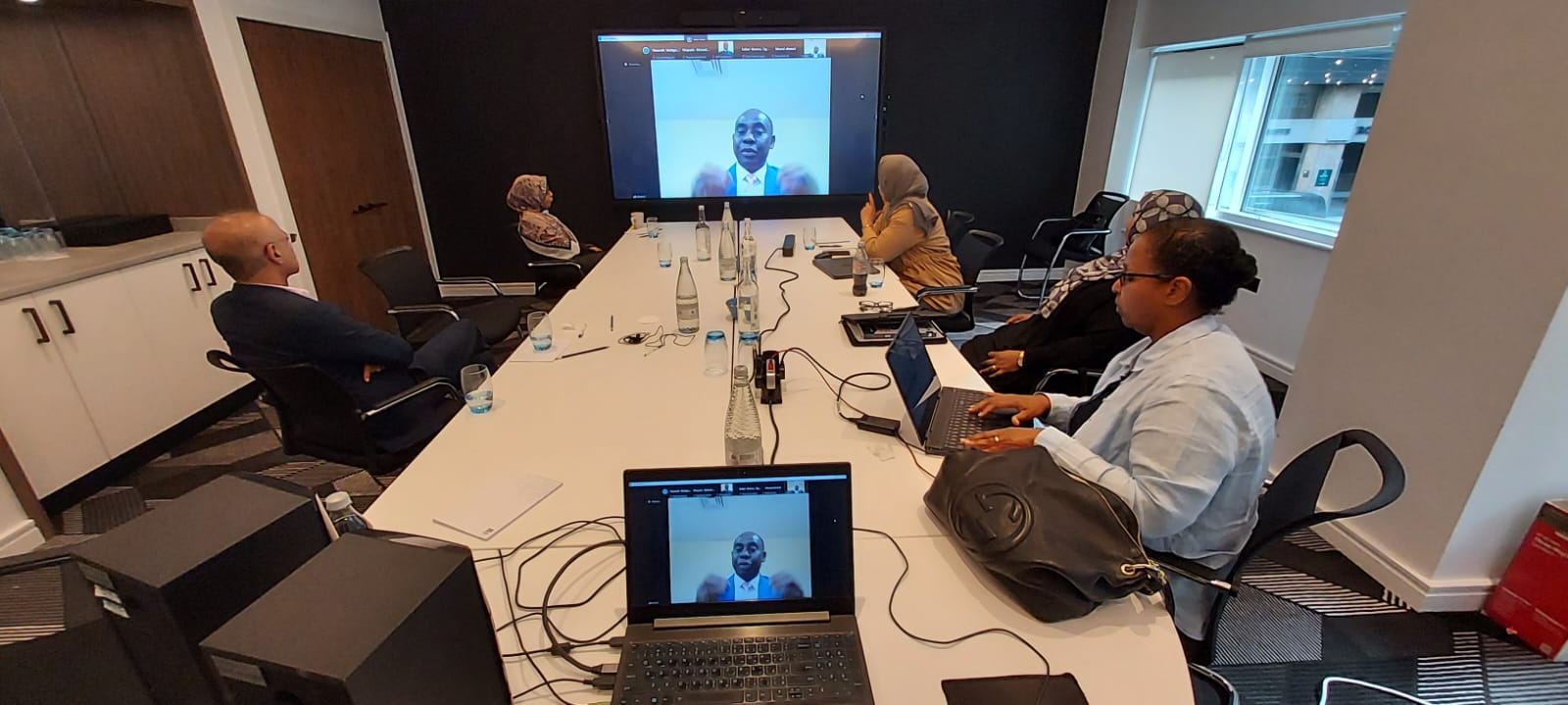
Friday 8th - Saturday 9th March 2024   (16:00-19:00 UK Time) ONLINE

Certificate of completion from Queen Mary University of London, UK

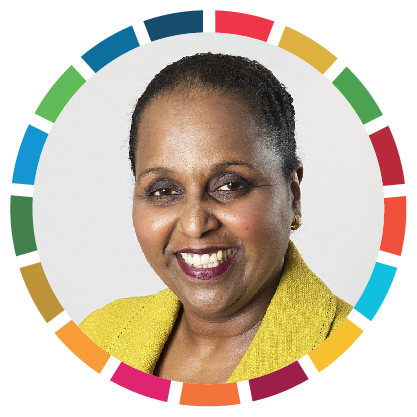
Delivered by Professor Sohier Elneil

Consultant in Urogynaecology and Uro-neurology
UCL Professor in Urogynaecology, Institute for Women’s Health, Faculty of Population Health Sciences, University College London, United Kingdom

Every year, between 15 and 20 million women develop a reproductive morbidity. These morbidities affect not only the health and wellbeing of the women themselves, but also have a negative impact on their children and families. As a result, women often find it hard to live with dignity, to care for their children, to be productive, to earn income, and to manage their other daily responsibilities--which are substantial for most women.

Some of the disabilities are acute and life-changing for a woman immediately during or directly after childbirth but can be rectified relatively quickly. Other disabilities develop more slowly and become chronic conditions that a woman endures day in and day out. Pelvic organ prolapse (POP) and urinary incontinence (UI) are such examples. They are part of a whole host of conditions that affect women throughout their life. The collective name for all these conditions is Female Pelvic Medicine and Reconstructive Surgery (FPMRS), or Urogynaecology.

The purpose of this course is to:

  • Provide an overview of FPMRS conditions.
  • Provide an understanding of how to investigate FPMRS conditions.
  • Provide a guide to managing FPMRS conditions.
  • Provide an understanding of how FPMRS conditions can be prevented.
  • Provide an understanding of the impact of FPMRS conditions in society and how they affects productivity, impact on economies and affect society. This is particularly important in societies where obstetric fistula and cultural practices like female genital mutilation are prevalent.

This course will help both clinicians and affiliated specialists understand what FPMRS is, how it affects women and how it can be managed. It will show the benefit in embracing a multi-disciplinary approach to providing care for women affected by FPMRS conditions. The courses will focus on incorporating evidence-based care, clinical skills development and education strategies for women affected by FPMRS that will help clinicians and affiliated specialists provide the best care for women at various stages of their care pathway.

The main aim is to effectively enhance and advance the knowledge of clinicians and affiliated specialists this complex clinical field.
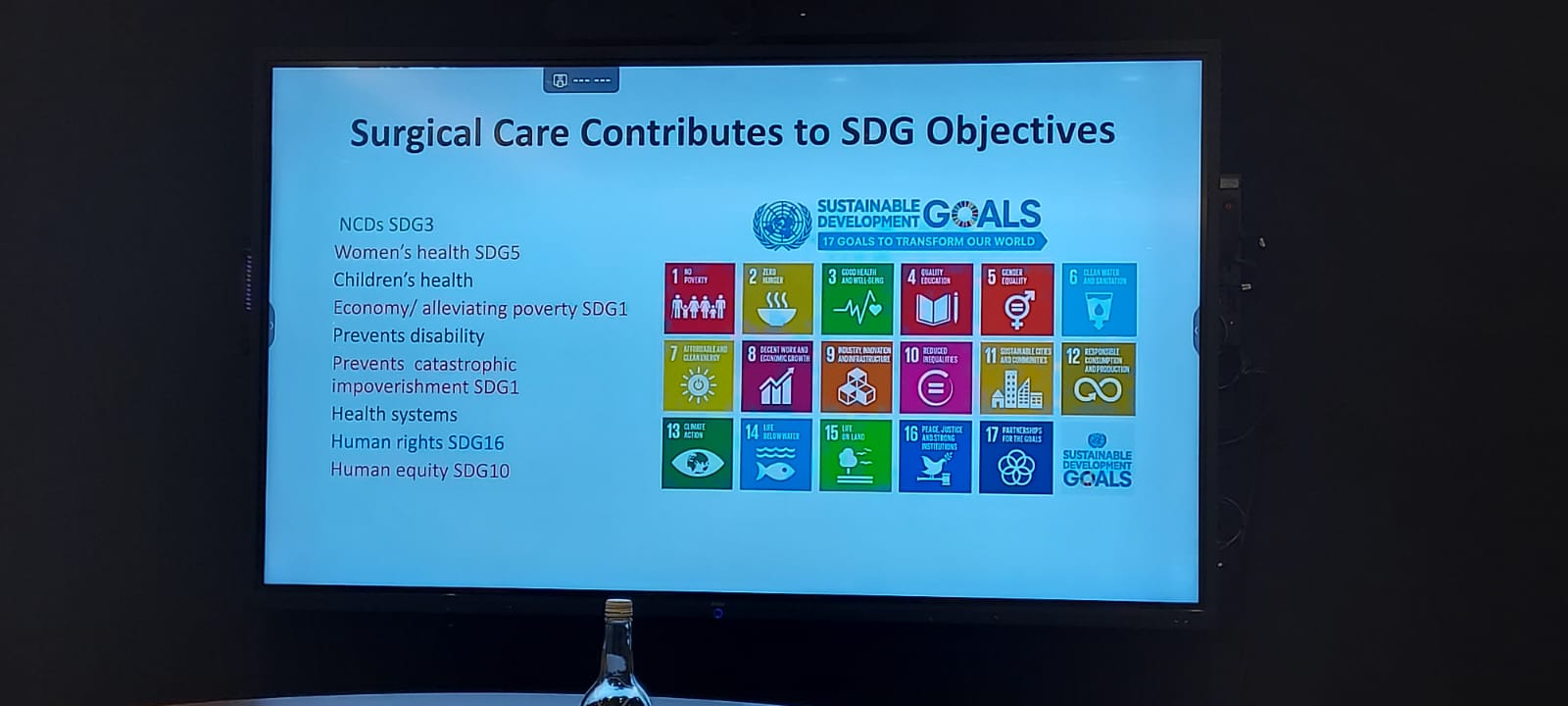
Related Sustainable Development Goals
  • SDG4
  • SDG3
  • SDG5
  • SDG8
  • SDG9
Related Courses
  • Leadership
  • Public Policy
  • Management
  • Health
Location

Queen Mary University, London, England EC1M 6BE, United Kingdom
Get Directions
Country/Regions
  • UK
  • Europe
Social Networks
  • Facebook
  • Twitter
  • YouTube
  • LinkedIn
  • Website

The course is designed and will be delivered by one of the world's top and renowned expert on female pelvic medicine and reconstructive surgery, global health, and women’s leadership, Professor Sohier Elneil

Professor Elneil is the first Professor of Urogynaecology at University College London and is a Consultant of Urogynaecology and Uro-neurology. She is based at University College Hospital and the National Hospital for Neurology and Neurosurgery in London. Her career spans several decades looking after women with complications following female genital mutilation (FGM), childbirth trauma, including fistula, and of ageing on the pelvic floor . The effects on women’s lives were destructive, and it galvanized her to undertake research into the medicine and science of pelvic floor disorders in women including incontinence, prolapse, chronic pelvic pain, and neurological dysfunction of the pelvic floor.

In recognition of her work, Sohier is the recipient of many awards and has been selected to write policy documents of national importance. In 2014, she authored the chapter on incontinence and prolapse for the Chief Medical Officer’s annual report 'The Health of the 51%: Women' report’. This proved to be a seminal policy document that continues to impact healthcare today. In 2018, she received several national awards voted for by the National Patients Association and the greater British public; and in 2021, in the centenary year of the London Surgical Society (LSS), she was awarded the Simpson Smith Memorial Medal for surgery. This award was jointly sponsored by the Royal College of Surgeons.

Sohier has a sustained track record of excellence in both clinical and scientific research, knowledge transfer, global reach, student personal and professional development and empowering the voices of women globally in their own health care. She has pioneered the application of truly integrated, patient supported, and holistic care pathways in pelvic floor medicine and surgery, which has facilitated innovative and safe treatment in this space. This advance is transformative for many, enabling them to not only to improve their health and quality of life, but to ensure it is individualized and safe care. She continues to have great passion to develop new opportunities to expand our understanding of the complexity of pelvic floor disorders in women, and in so doing further improve their lives and that of their families.

Prizes, Awards and Other Honours

  • 2021: Simpson Smith Medal in Surgery.
  • 2018: Daily Mail NHS Health Hero Award, Presented by Rt Hon Prime Minister Theresa May.
  • 2018: NHS Patient Association and BBC One Show Health Hero Award (70th NHS Anniversary).
  • 2018: Recognition Award, Sudan Doctors Association.
  • 2009: One of the Most important Muslim Women in Great Britain, Sunday Times Awards.
Contact Us
To register/enquire about this course and all our various comprehensive list of courses and workshops, please contact us (admin@wasd.org.uk) and if you have any question and/or if you would like to request a training workshop/program not listed in our portfolio please contact our training coordinator Janet Snow at: janet.snow@wasd.org.uk.
Registration and Fees

The course will be delivered either face-to-face or online via video conferencing facilities using Zoom Application. Included in the course fee, the following learning materials will be provided:

  • Admission to all sessions.
  • All overhead slides (PDF format).
  • Case studies (print and video).
  • Certificate of attendance from Queen Mary University of London and WASD.
What will you learn

In the first Module of the course you will learn:

Anatomy, Physiology and Pharmacology of the pelvic floor, Quality of Life Questionnaires, Assessments, and Investigations.

  1. To demonstrate the knowledge skills and attitudes required to make an appropriate clinical assessment of a patient with an FPMRS condition.
    • Anatomy and function of the lower urinary tract and pelvic floor.
    • To understand the different facets of obtaining a history of the woman’s condition:
      • Obtain a general history.
      • Obtain a urinary/prolapse/bowel/pain and sexual history.
      • Use standardised questionnaires.
      • Use of quality of life (QoL) questionnaires.
      • Conservative management.

In the other parts of the course, each module 6 hrs (contact admin@wasd.org.uk for dates), you will learn:

Module 2: Conservative management of FPMRS Conditions:

  1. To demonstrate a thorough understanding of the evaluation and treatment of lower urinary tract disorders using conservative measures (including recommendations of the International Consultation on Incontinence).
    • To understand the following:
      • Fluid management.
      • Physical therapies.
      • Pharmacological therapies.
      • Catheters and drug therapies for voiding difficulties.
      • Pessaries for prolapse.
      • Other therapies.

 Module 3: Surgical management of FPMRS Conditions:

  1. To demonstrate the knowledge and skills to understand the indications for and the ability to carry out the required surgical procedures.
  2. This includes the skills and attitudes to counsel patients appropriately, to have an understanding of potential surgical complications and how to deal with them when they occur.
    • To understand the surgical management of:
      • Urodynamic stress incontinence.
      • Secondary surgery for urodynamic stress incontinence.
      • Detrusor overactivity.
      • Voiding difficulties.
      • Postoperative problems.
      • Advantages/disadvantages of different techniques.
      • Pelvic organ prolapse.

 Evaluation processes

  1. Identifying outcome measures and evaluating the woman with an FPMRS condition.
  2. Applying specific skills and procedures ensuring quality and safety of care for each woman.
Program Structure
  • There will be an activity or set of activities for each session which will be designed to help you engage with the introduction to the theories explored within the course.
  • Your facilitator will be on hand to guide you through the programme and will expect you to bring personal experience and reflection on the topics covered.
  • Group work will be required for participants to engage in the course. Such activity allows participants to embed the new knowledge within their experience through active discussion and challenge.

The course consists of three modules, as outlined below:

  • Anatomy, Physiology and Pharmacology of the pelvic floor, Quality of Life Questionnaires, Assessments, and Investigations.
  • Conservative management.
  • Surgical management.

Whilst this course will guide the attendee to enhance their knowledge in the field, they will also gain a thorough understanding of the impact of pregnancy, parturition, menopause and ageing on the pelvic floor and the lower urinary tract function.

The conditions that will be included, amongst others, are:

Incontinence:

  • Urodynamic stress incontinence.
  • Detrusor overactivity/Overactive bladder syndrome.
  • Voiding disorders and urinary retention.

 Pelvic organ prolapse, both primary and recurrent

 Bladder and Bowel organ disorders:

  • Urinary disorders in pregnancy.
  • Urinary disorders in childhood.
  • Urinary disorders and hormone deficiency states.
  • Urinary problems secondary to medical disorders and drugs.
  • Lower urinary tract and lower gastrointestinal tract fistulae.
  • Obstetric anal sphincter injury (OASIS).
  • Lesions of the central nervous system affecting urinary, faecal control and pelvic floor.

 Other conditions, including:

  • Pelvic pain.
  • Evaluation and care of the elderly.
  • The physically or mentally handicapped.
  • Emotional and behavioural disorders.
  • Effects of pelvic surgery and irradiation on the lower bowel urinary tract and pelvic floor.
  • Sexually transmitted diseases.
  • Symptoms associated with sexual intercourse, e.g. coital incontinence.

Professor Sohier Elneil is the first Professor of Urogynaecology at University College London and is a Consultant of Urogynaecology and Uro-neurology. She is based at University College Hospital and the National Hospital for Neurology and Neurosurgery in London. Her career spans several decades looking after women with complications following female genital mutilation (FGM), childbirth trauma, including fistula, and of ageing on the pelvic floor . The effects on women’s lives were destructive, and it galvanized her to undertake research into the medicine and science of pelvic floor disorders in women including incontinence, prolapse, chronic pelvic pain, and neurological dysfunction of the pelvic floor.

In recognition of her work, Sohier is the recipient of many awards and has been selected to write policy documents of national importance. In 2014, she authored the chapter on incontinence and prolapse for the Chief Medical Officer’s annual report 'The Health of the 51%: Women' report’. This proved to be a seminal policy document that continues to impact healthcare today. In 2018, she received several national awards voted for by the National Patients Association and the greater British public; and in 2021, in the centenary year of the London Surgical Society (LSS), she was awarded the Simpson Smith Memorial Medal for surgery. This award was jointly sponsored by the Royal College of Surgeons.

Sohier has a sustained track record of excellence in both clinical and scientific research, knowledge transfer, global reach, student personal and professional development and empowering the voices of women globally in their own health care. She has pioneered the application of truly integrated, patient supported, and holistic care pathways in pelvic floor medicine and surgery, which has facilitated innovative and safe treatment in this space. This advance is transformative for many, enabling them to not only to improve their health and quality of life, but to ensure it is individualized and safe care. She continues to have great passion to develop new opportunities to expand our understanding of the complexity of pelvic floor disorders in women, and in so doing further improve their lives and that of their families.

Prizes, Awards and Other Honours

  • 2021: Simpson Smith Medal in Surgery.
  • 2018: Daily Mail NHS Health Hero Award, Presented by Rt Hon Prime Minister Theresa May.
  • 2018: NHS Patient Association and BBC One Show Health Hero Award (70th NHS Anniversary).
  • 2018: Recognition Award, Sudan Doctors Association.
  • 2009: One of the Most important Muslim Women in Great Britain, Sunday Times Awards.
Target Participants
  • The course covers materials for all levels from junior through to senior professionals in healthcare sectors.
  • Clinicians: Medical, Nursing, Physiotherapists, Academics, Psychologists, Social workers, and Paramedical workers.
  • Healthcare Associated Professionals: Operation managers, Administrators, Human Resource managers, and Quality and Safety teams. Their comprehension and understanding of FPMRS clinical conditions can help them plan services better.
  • Organization Strategists and Policy Makers: Those who want to know more about how women with chronic FPMRS conditions, who have limited access to healthcare, can impact the workforce and productivity.
Benefits for Employers

The course participants will have the opportunity to showcase their role in different fields with their employers. After completion of the course, participants (supported by their tutor with additional fee) will be given the opportunity to write a report describing what they have learnt and what is particularly relevant to their employers. The report will focus on one single perspective or to build a hybrid model that will help their employers to achieve their strategic and tactical goals. This will help reassure the employers of the benefits of the programme and help consolidate managers’ understanding.

Gallery

You May Also Be Interested In

Digital Transformation and Sustainable Development for Future Women Leaders

18 July 2023 This two-day course will be facilitated by world renowned experts in Digital Transformation…
  • Phone Number
  • SDG4
  • +2

Artificial Intelligence and Data Science

This course has been designed to introduce a variety of fundamental perspectives on Artificial Intelligence…
  • Phone Number
  • SDG8
  • +5

Artificial Intelligence and Knowledge Management for Future Digital Leaders

4 September 2023 and Multiple 2023 dates Artificial Intelligence and Knowledge Management for Future…
  • Phone Number
  • SDG4
  • +2

WASD is a global forum that brings together experts from across the world to discuss issues relating to sustainable development, science and technology management.

Facebook-f Youtube Twitter Linkedin Flickr

Quick Links

  • About WASD
  • Gallery
  • Teams
  • Contact Us
  • Book Store
  • Timeline

EXPERTS

  • Global Who’sWho
  • Women Who’sWho
  • Diaspora Who’sWho
  • Arab Who’sWho
  • Africa Who’sWho
  • Sudan Who’sWho

Get in touch

© Wasd

All rights reserved

Cart

  • Facebook
  • Twitter
  • WhatsApp
  • Telegram
  • LinkedIn
  • Tumblr
  • VKontakte
  • Mail
  • Copy link